Thursday, March 31, 2016

Cuban Refugees

I was really looking forward to Cuban food during our stay in Florida.  I didn't give a thought to seeing the effect of the recent changes in the US relations with Cuba.

Under the United States' longstanding "wet foot, dry foot" policy, Cubans fleeing to America may remain in the U.S., so long as they make it to shore. If intercepted at sea they are returned to Cuba. The first reminder of this policy and the decades long desperation of the Cuban population occurred while sitting in the patio of a small Cuban cafe.  A piece of paper, enclosed in plastic, explained the meaning of a boat sitting in the patio, which said:

On February 19, 2013 six brave young men left the shores of Cardenas, Cuba province of Matanta in this boat named Lorento.  As you can see the conditions under which these Cubans sailed were very precarious.  They, as many young Cubans, prefer to risk their lives than to live under a totalitarian communist regime.  Thank God these young men managed to tread American soil unlike many others that have died trying.

Today thousands of Cubans are very grateful to this great nation for hosting them and accepting them but especially for allowing them to live in freedom.


This boat was sturdier than many that make the crossing
 When we visited the Dry Tortugas, which will be a separate blog, we saw two primitive boats in the fort and learned from a ranger that many land on the national park, which is less patrolled than the coastline of the Keys.  In the last few weeks two boats made it, one with 19 men who landed in full view of the tourist ferry docked at the fort.  Apparently those on board the ferry sympathized with the refugees and cheered their success.  Park police corral the immigrants, holding them until the Coast Guard arrives.  We were told that the numbers have increased since the announcement of renewed relationship as the Cubans expect the wet foot, dry foot policy to end.  Given projected calm seas in a few days they expect more arrivals.


Examples of flimsy, homemade vessels used in crossing
A recent post in the Maritime Executive featured a story of the interception of a vessel carrying Cubans,  seven of whom were injured by gunfire as they prepared to leave Cuba.  It seems those with the more serious injuries benefited by being taken to the US for treatment and apparently would be able to remain.

http://maritime-executive.com/article/seven-cuban-migrants-on-raft-injured-by-gunfire
On two occasions, Cubans who were born in Cuba, have explained that they cannot travel to Cuba using their US passports but must pay a lot of money, obtain birth records etc. and obtain a Cuban passport.  I haven't looked but apparently our passports state place of birth, so the Cuban government would refuse entry for such individuals.  In both instances they told me that they will not travel back under those conditions.  A young woman told me yesterday that despite recent efforts "nothing has changed for the people of Cuba."  There are several Cuban restaurants nearby, including a seafood one where we had lunch and bought stone crab.  It will be fun to explore the cuisine and try the Cuban coffee we see advertised here widely.

Wednesday, March 30, 2016

Key Marathon and Key West


We have been settled in Key Marathon for a little over two weeks.  Up to Easter, the RV park was full of snowbirds and families taking advantage of spring break.  After many left, we were able to move so we now have view of the gulf to the northwest.    What a difference a view and fewer people make.


The downside to the park clearing out is that Max lost his new best friend, Gus.  Gus is owned by Adam and his wife, who were down from their farm in Ontario, Canada with Gus and their new 5 month old baby.  Gus was rescued as a young puppy after he, his sister and mother were taken, with permission, from a First Nation tribe in northern Ontario.  There are no veterinary services in those areas and the animals are often neglected and starving.  Adam said Gus, his sister and mother looked like they belonged in Ethiopia.  Gus was the darling of the park, getting along with all people and dogs.  I have never seen Max play so vigorously and he slept well after his romps.


The local advice was to watch the cruise ship schedule when planning a trip to Key West and go only when there was no more than one in town.  Learning of such a day, we headed down about 60 miles to visit the Mel Fischer Atocha Maritime Heritage Museum, the Hemingway House and have a look around the town.  Max was taken to a local day care so there would be no worry about overstaying our visit.   Parking is a challenge in Key West and we found a spot, close to the museum, but pricey at $5 an hour.  For the privilege of paying a fortune to park in the dirt in a crowded spot the attendant had  the most unpleasant attitude imaginable.  

The centerpiece of our visit was the treasure Museum established by the family of Mel Fisher.  


Museum Entrance with the Ubiquitous Chickens


Mel Fisher lived in California where his parents owned a chicken farm.  He became interested in diving and ran a dive shop in Redondo Beach but relocated with his wife to Florida to pursue treasure hunting.  After researching lost ships, Mel began looking for the Nuestra Señora de Atocha.  Mel searched for about 15 years and on July 20, 1985 the ship was found.  The Atocha was built in Cuba and was part of a convoy returning new world treasure to Spain.  Ships could only sail to and from the Americas at certain times due to rough winter weather in the Atlantic as well as late summer/fall hurricanes.  The ships were six weeks late leaving Cuba and only one day after departing, on September 5, 1622 the convoy experienced a severe hurricane.  Four ships were sunk, including the Atocha,  and 260 passengers and crew were lost.  What Mel found was valued at $450 million and included 40 tons of gold and silver as well as famous Columbian emeralds.  Interestingly, only about half the treasure was discovered.

Mel Fisher holding gold chains


Included in the treasure were a number of gold chains.  At the time Spain taxed bullion at a higher rate than jewelry so chains were made to transport gold back to Spain.  Not only would taxes be reduced but the pre-measured links were soft and could be twisted apart and used as an easy and discreet form of payment.


Spain Cornered New World Wealth

How do people figure these things out?


Emerald Pendant from Colombian Mines thought to be Destined for Clergy


For those interested in Spanish history and its one time domination of the seas and treasure of the Americas, this is a nice summary

http://www.melfisher.com/Library/AtochaMargStory.asp

On the way to the Hemingway House we saw some interesting sights.

At Hemingway's suggestion the bar was named after one in Havana

There are some free spirits in Key West

The Strangler Fig looks beautiful but invasive

Our parking time was about to expire so we skipped the Hemingway House tour but were able to go to the gift shop and on the way we got a glimpse at the lovely property.  Maybe next time.


Heminway's famous six toed cats


Thursday, March 17, 2016

On the Road Again

The plan was to arrive in the Florida Keys on March 15 for our one month stay.  We made it with a day to spare, narrowly avoiding the catastophic flooding in Texas, Louisianna, Mississippi etc.  Three days after leaving the Texas/LA border, I-10 was closed in both directions.  I can't even imagine the mess that must have been.  We had one breakdown, resulting in a 60 mile tow which was fortunately covered by the Freightliner warranty.  The other problem was failure of the alternator to charge the house batteries while underway, a big problem with the new residential fridges and dry camping in Walmarts.  It has been diagnosed as a failed solenoid, which will be fixed while we are in the Keys.

Tow from Gila Bend
Max is becoming a gypsy dog, adapting to ever changing sights and smells.  He looks out endlessly, which cannot be done on lying on the floor.  His solution-share my chair for 3600 miles.


We had great success on backroads in Texas getting to McAllen to see my brother John and his wife Anna.  Our experience with roads in Texas is that they are very good.  It must be those high income tax rates!  McAllen is interesting demographically, older white snowbirds and Hispanics.  We had a delightful lunch at Delia's where they specialize in a variety of homemade tamales.  Sunday brought so many customers that local police helped with traffic getting in and out.  We were the only Anglos and were treated to a small taste of the weekend only menuedo, tortillas made in front of you and sweet tamales that tasted like bread pudding with ground nuts and raisons.

Fresh Tortillas at Delia's

Another special outing was lunch at the Riverside Restaurant right on the Rio Grande.

John, Anna and the back of himself at the Riverside Restaurant


Sadly, the Federal government has left it to locals to properly patrol the river border.

Texas Highway Patrol protecting the border on the Rio Grande

I have to compliment Florida on their Interstate rest stops.  They are landscaped and quit pleasant, unlike California which has closed so many.  It must be the high income tax revenue in Florida.
One day we had two wild experiences in rest stops.  The first entailed a small dog, about 10 pounds, who decided he wanted to get out of the car and come play with Max.  He managed to get three legs out of a window cracked open about 4 inches.  I-10 was only a short distance and I was terrified that he would panic and run into traffic.  I managed to get the last leg out and held hm till his owner returned.  He had lost his sibling only a short time before and was apparently missing canine company.  The second incident was at the end of the day.  It was raining and a car entered the rest stop going fast, lost control, hit a tree and careened towards Richard who was walking Max.  They both ran and I could barely get Max out that night and the following morning.  The driver seemed OK  and Richard's heart returned to normal quite some time later.

The next post will feature the fun attractions, foods and doings in South Florida.


Wednesday, July 8, 2015

New Mexico's Fiber Tradition

I only learned to knit in the last few years and, with the move to Vashon, was introduced to a vibrant culture of knitting, weaving, spinning and natural dyeing.  While not having much talent, it has been fascinating and opened my eyes to appreciate the treasures that exist in New Mexico.  In fact, the introduction of sheep to the Americas was thanks to the Spanish explorers.  They brought a hardy breed from the Iberian Peninsula called the churro (originally churra).  The breed is known for its ability to survive harsh conditions and ewes often have twins and the lambing is successful without human intervention.  The sheep were important for food and fiber in the Hispanic culture of the Southwest and quickly adopted by various Indian tribes.  Both Hispanic and Navajo weaving became rooted in the two cultures.  Different techniques are used by each, with different kind of looms.  Both made rugs and blankets from the wool produced from the churro sheep.

The churro became so popular that the Mexican churro pastry was named after the wavy churro sheep fiber.

The sheep population grew in Arizona and New Mexico, as well as Southern Colorado and Utah and there may have been some overgrazing.  In the 30's, when drought devastated the US, misguided and insensitive federal agents basically exterminated the breed, shooting thousands and leaving their carcasses to rot, in their efforts to control overgrazing.  They also thought it was a breed inferior to the sheep from Northern Europe.  The breed was reduced to around 500 animals and only recent efforts by biologists and some ranchers have brought it back.  I am told it has wonderful properties for rug weaving in particular, and is a sweet and healthy meat.  To the latter I can attest.

Prize winning Churro sheep


Shepherd's Lamb is one of the Hispanic ranches that has cultivated the breed in the area around Chama.  They provide wool to the Tierra Wool weaving co-op and meat to the area as well as to high end restaurants.  They still graze their flock on wild land, moving the sheep to higher pasture in the summer.
Seasonal flock move to higher pasture

In 1983 the Tierra Wools Weaving co-op was established to keep alive the Hispanic tradition of spinning, natural dyeing and weaving in the area.  The co-op is a few miles south of Chama in the small town of Los Ojos.

Tierra Wools Weaving co-op

Tierra Wools Showroom

Natural Dyed Churro Wool

Tierra Wools Weaving Studio

For those those who have a fiber passion, here are some more references.

http://www.nmmagazine.com/love-of-lamb/#.VZvPu2BsU9X

http://www.newfarm.org/casestudies/tierrawools/gerard2.shtml

http://www.santafetravelers.com/our-travels/tierra-wools-2/

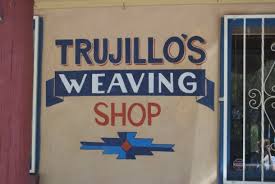
Going back a few weeks to the Santa Fe area, the town of Chimayo is known for a centuries old tradition of Hispanic weaving, with the Ortega and Trujillo families being prominent.  The BD brought his book and patiently waited while I visited three studios, Ortega, Trujillo and Centinela.


Chimayo is still a small village and the fiber arts are the big attraction.  The fact that it is still sleepy and centuries old is really special.  While other wool is used, churro rugs and blankets are still made.  I treated myself to a pillow made from natural colored churro wool in the very traditional pattern for the couch in Pancho.


The pillow will be woven in the pattern and colors above and shipped to me in the next few weeks from the Trujillo studio.  The picture doesn't do the colors justice, the browns and carmel are quite rich looking.

At the Centinela studio I found a lovely wall hanging.


The hanging is made from naturally dyed wools using:

green-indigo and chamisa
tan-black walnut
pink-cochineal
blue-indigo
purple-logwood
orange-madder root
natural wool colors of cream and black


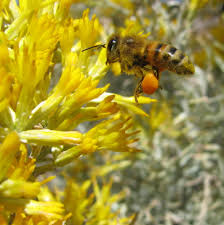
Some of the plant material used in the area that was new to me included chamisa


Chamisa


Chamisa


as well as Yerba de la Negrita.

Yerba de la Negrita


Tuesday, July 7, 2015

Chama and Northern New Mexico


We were in Chama for about a week, enjoying the very northern part of NM while waiting for our appointment in Farmington at the Freightliner dealer for some warranty work.  We have been to Chama before, the last time by accident and discovered the wonderful narrow gauge steam train that runs between Chama and Antonito, CO.  The train system in the area was established in 1880-81 as the Denver and Rio Grande Railroad and the stretch known as the Cumbers and Toltec is 64 miles long, summits at over 10,000' and took only 9 months to complete. Trains in the Northern NM, Southern CO area were originally built to service the silver mining industry, then used to carry oil and pipe for the oil boom around Farmington.  It also carried peppers from Santa Fe (the Pepper Express) and transported lamb and wool raised on ranches in Northern NM and Southern CO.  More on that in a future "Fiber" blog (no, not Metamucil!). While we did not ride the train this time, we camped right next to the trestle and watched and heard it travel north at 10:00 am and return at 4:00.  It is a big operation jointly run by the  "Friends of the Train" and reactivated by a cooperative effort between New Mexico and Colorado.  The RV Park  contains a number of retirees who spend the summer volunteering in the steam shop.  

Steam Shop


The only wooden coal steam train chute left in the US

While we didn't ride the train we did take a drive that paralleled the route and were able to follow the progress of the train as it traveled north.  While different from being on the train, it was as nice an experience.


This part of NM is beautiful and still very green because of the rainy spring.  We get thunderstorms most afternoons and I have never experienced such loud thunder.  Max is not fond of it but doesn't go too crazy.  Raggie's hearing loss is an advantage.  The other end of the train is a small town named Antonito.  It used to be a major sheep raising area but has clearly fallen on hard times.  An old building intrigued me.

SPMDTO stands for Sociedad Protección Mutua De Trabajadores. and was founded in 1900 in Antonito in order to prevent Hispanic land usurpation and combat discrimination against wage laborers.  It grew into 65 lodges in CO, NM, and UT providing financial aid, low cost insurance and fraternal support.

Another interesting building was the Catholic Church, the first church in Colorado, dedicated in 1863.


First Church in Colorado


One day we took about a 90 mile ride due east to Taos.  It had been a few years since I visited the little town, which was relatively quiet and quaint at the time.  No more.  Like so many places it seems, the word gets out and they become overrun by tourists, retirees and people seeking 2nd homes.  It is a small village with limited traffic infrastructure, resulting in crowded streets and too many people.  We found a lovely cafe at the edge of town and had, yes some more, NM food in a shady patio.  While the town was a big disappointment, the ride to and from was gorgeous.  The summit is 10,500, with the western section a part of a Spanish land grant and the eastern belonging to the Carson National Forest.  At one time there were ranches in the area but the harsh conditions resulted in most being abandoned though summer grazing leases still exist.


Brazos Cliffs


Just west of Taos is the Rio Grande Rift.  It is an impressive, deep "canyon" with the Rio Grande at the bottom going south.  According to an article on Geology of the Taos area:

"The Rio Grande Rift has cleaved Northern Mexico, Texas, New Mexico and half of Colorado over a distance of 800 miles.  The rift is somewhat like a plowed furrow with raised shoulders, partly filled with alluvium.  In this area, the shoulders are the Sangre de Cristo Mountains on the east and Brazos Uplift (Tusas Mountains) on the west.  Just west of Taos, the floor of the rift is estimated to be down-faulted 36,000 feet.  If we could vacuum out the alluvium, the basin would be six times deeper than the Grand Canyon."

Rio Grande Rift